
Passive Entry & Passive Start (PEPS) System – RFHUB Module
Developed software for the RFHUB module powering Passive Entry, Passive Start (PEPS), and Passive Entry Keyless Go (PEKG) features—enabling seamless and secure vehicle access and ignition across high-volume OEM programs.
Project Overview
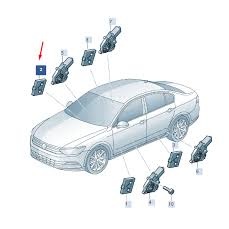
This project centered around the design and validation of vehicle access and start features that provide a frictionless user experience while maintaining stringent automotive-grade security.
The RFHUB serves as the central communication node between the vehicle and key fobs, orchestrating LF (Low Frequency) wake-up, UHF communication, and cryptographic authentication.
My work focused on Keyless Go functionality and key-fob localization logic, ensuring fast and reliable unlock/start operations under varying RF conditions.
Additionally, I contributed to key-fob kitting functionality—allowing vehicle access even when the fob battery is depleted by leveraging near-field low-frequency communication.
Key Details / Outcomes
Reliable Keyless Access: Delivered production-level software enabling secure and low-latency door unlock/start.
Battery-Dead Access Feature: Designed low-frequency-based wake and response flow for key-fob access without active transmission.
Localization Logic: Implemented algorithms within RFHUB to determine key-fob position relative to the vehicle, enhancing anti-relay and safety logic.
Scalability: Supported feature variations across multiple OEMs with shared RFHUB hardware architecture.
Challenges & Learnings
- Ensuring consistent communication across LF and UHF channels under real-world RF interference scenarios.
- Balancing response latency and cryptographic security for Passive Start events.
- Designing a fallback mechanism for keyless access with depleted key-fob power while maintaining safety compliance.
- Collaborated cross-functionally with hardware and validation teams to tune antenna power, signal thresholds, and timing windows.
Have a similar embedded project in mind?